The Best Time to Visit Busan: A Month-by-Month Guide
5 minute read

If you're planning a trip to Busan, the first thing to know is this: you're not getting Seoul with a beach attached. Busan is its own city, warmer year-round, more seafood-obsessed, and way less obsessed with being a capital. That's its appeal.
The best time to visit depends on what you actually want to do. Want to swim? September and October are nearly perfect. Want cherry blossoms before Seoul sees them? Late March. Want to avoid other tourists entirely? December through February is your window. I'll break down every month so you can pick the time that fits your trip, not the other way around.
The honest verdict: October is the best month for most people. BIFF is running, the fireworks festival is on, weather is stable, and you've still got beach access without the July-August chaos. But if you're flexible, every season here has something worth visiting for.
The second best period is March-May. In March you can enjoy cherry blossoms. In April-May the weather is getting warmer, the beaches get lively and people are happy to be outside again after the colder months.
But if you're flexible, every season here has something worth visiting for.
Quick Reference: Busan by Month
| Month | Crowds | Best For |
|---|---|---|
January |
Low |
Quiet city exploration, seafood, mild winter |
February |
Low |
Early spring feel,off-season charm |
March |
Moderate |
Cherry blossoms, Spring arrival |
April |
High |
Cherry blossoms (early month), beach opening |
May |
Moderate |
Excellent weather, fewer crowd than April |
June |
Moderate |
Beach season opening, warm but not too hot yet |
July |
Very High |
Peak beach season, busy |
August |
Very High |
Peak beach season, hottest, packed beaches |
September |
Moderate-High |
Best beach weather with manageable crows |
October |
High |
BIFF, fireworks, great weather and overall balance |
November |
Low |
Autumn colors, quiet, decent weather |
December |
Low |
Mild winter, deserted beaches, off-season prices |
Monthly Weather in Busan
Spring in Busan: March to May
March and April in Busan are when the city wakes up, and the cherry blossoms arrive earlier than anywhere else in Korea. If you want to see cherry blossoms, Busan peaks in late March and early April, about 5 to 7 days before Seoul. You've got time to hit Busan first, then head north if you want to catch Seoul's blooms too
The best places to see them here aren't the massive organized festivals you get elsewhere. Dalmaji Hill in Haeundae is a winding road lined with cherry trees that overlook the sea. The Oncheoncheon Stream (a walk along a small urban stream) is where locals actually hang out, not tourists. University campuses around the city are also packed with blossoms and almost zero foreign visitors.
By May, the weather is excellent: 17 to 23 degrees Celsius, sunny, and the beaches are opening up. May is underrated for Busan. You get pleasant weather without the July-August crowds, and the sea is getting warm enough to actually consider swimming. It's my favorite shoulder season here.
The downside to spring is that Busan's pollen count can be higher than Seoul's, so if you have allergies, budget extra antihistamines.
What to do in Spring
-
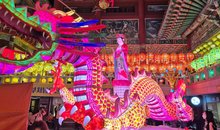
Experience the beauty of thousands of lanterns lighting up Busan. A complete guide to Samgwangsa’s festival, including tips and best visiting times.
-
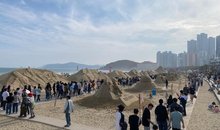
The Haeundae Sand Festival, held annually in Busan, Korea, has evolved into one of the world's largest sand sculpture events. Admire classic and modern art masterpieces recreated in sand.
Summer in Busan: June to August
June brings the official start of beach season. Temperatures jump up, and the infrastructure opens up: lifeguards, beach cafes, rental shops for umbrellas and loungers. The water is warm enough to actually swim without your body staging a protest.
Then July and August hit. These months are peak season, and I mean peak. Haeundae Beach alone gets 1 to 2 million visitors across the summer, and most of them show up in July and August. The city gets crowded, accommodation prices spike, and the beaches are packed shoulder-to-shoulder by midday. Expect monsoon rain in July, which cools things down slightly but also makes the humidity feel heavier.
Here's the thing: if you're coming for beach season specifically, July and August have an energy that earlier months don't. That said, if you want to actually enjoy the beach without a thousand other people, go to Songjeong Beach north of Haeundae. It's smaller, popular with surfers, and stays quieter. Gwangalli Beach offers the bonus of the Gwangan Bridge, especially beautiful at night, and it's less packed than Haeundae.
If summer is your only option, come in early June, before the rain season. The weather is still warm, the water is getting comfortable, and the crowds haven't peaked yet. You'll have a much better experience.
Autumn in Busan: September to November
September is genuinely the best month for beach season in Busan. Temperatures drop slightly, which means it's still warm enough to swim, but not so hot that you're melting on the sand. The crowds from August are gone, and the water is still warm from the summer heat. This is the sweet spot.
Early September can still catch the tail end of the International Rock Festival at Dadaepo Beach, depending on the year. It's smaller than BIFF but a solid vibe if live music is your thing.
October is when Busan really stands out. This is when the Busan International Film Festival runs, and the city transforms into something genuinely exciting. BIFF is Asia's largest film festival, centered around Haeundae with the BIFF Village hosting outdoor screenings. Many screenings are free or affordable, and the energy is infectious without being overwhelming. It's still warm enough for beach walks, but the crowds are spread across screenings and events. Late October also brings the Busan Fireworks Festival at Gwangalli Beach, one of the largest fireworks displays in the country.
November is where you start to feel autumn turning into winter. Temperatures cool to 9 to 16 degrees, which means you're wearing layers, but it's still dry and pleasant. The crowds drop significantly. If you're interested in temple visits, autumn foliage starts coming in mid-to-late November at Beomeosa Temple on the slopes of Geumjeong Mountain. The hiking trails through the autumn colors are quiet and excellent.
September through early November is genuinely the best window for visiting Busan if you have flexibility. The weather is ideal, the crowds are manageable, and there's something happening almost every week.
What to do in Autumn
-

The ultimate guide to the Busan Fireworks Festival! Learn about the best places to watch, ticket info, and tips for an unforgettable experience in Korea.
Winter in Busan: December to February
Here's what people don't realize about Busan winters: they're not actually that cold. You're looking at 2 to 10 degrees Celsius, which sounds chilly on paper but feels nothing like Seoul's brutal winter. Busan rarely gets snow. Most days are just cool and clear.
Winter is when Busan becomes an insider's destination. The beaches are completely deserted. Haeundae, which was packed two months earlier, is just an empty stretch of sand and sea. Seafood is cheaper and more abundant because it's the natural season.
December is mild enough that you can still explore the city. The only downside is the daylight hours. You're looking at about 10 hours of daylight in December, which means it gets dark by 5 PM. Plan accordingly.
Practical Tips for Visiting Busan
Getting There
The KTX (Korea Train eXpress) from Seoul to Busan takes about 2.5 hours. Book ahead if you're traveling around BIFF, Chuseok (Korean Thanksgiving), or other major holidays. October especially fills up fast. I recommend taking a flight. It's faster and most of the time it's slightly cheaper too.
Where to Stay
Haeundae is the obvious choice if beaches are your priority, but it's far from the city center. Seomyeon or Nampo-dong areas give you better subway access to explore the whole city and still reach the beach within 20 to 30 minutes. You're not locked into one neighborhood.
Beach Etiquette
The lifeguards take their jobs seriously, especially in summer. Beach season officially runs from late June through August, and lifeguards are on duty during those months. They will whistle you back if you go to far out in the water. Outside those dates, you can still swim, but you're doing it without official coverage.
Frequently Asked Questions
August is the warmest, but it's also the most crowded and humid. September offers better beach conditions with slightly lower temperatures and far fewer tourists. If heat is your priority, go August. If you want actual enjoyment, go September.
Winter here is mild compared to Seoul, rarely dropping below freezing or snowing. The beaches are empty, seafood is cheaper and better, and you get the city to yourself. It's perfect if you want to experience Busan as a city, not as a beach destination. Pack layers.

Lived in South Korea since 2020. On a F6 residency visa.
![saily-ultra-plan-banners-[en]-300x250-V2](/media/images/xsaily-ultra-plan-banners-en-300x250-V2.original.png.pagespeed.ic.HgpdXZCiY6.jpg)
Related posts

Early June is one of the best times to visit South Korea: warm, green, uncrowded before monsoon arrives. The window to aim for and when to leave.

South Korea in August is peak beach season and the hottest month of the year. Liberation Day, better Haeundae alternatives, and what to do in the heat.

Ananti the Cove in Gijang is a hotel on Busan's coast. I've stayed at Ananti the Cove twice: once as a regular guest, once with access to the members-only side.